
- Home
- Why EstiVerify Exists
- Services
- How It Works
- Help Guides
- Communicaitons DIfficulties
- Delay and Stalling Tactics
- Diminished Value Guide
- Hidden Damage Teardown Proble
- Liability & Fault Disputes
- Lowballing & Estimate Disputes
- Mechanical vs Collision Damage
- Misleading Adjuster Claims
- OEM vs Aftermarket Parts
- Payment Timing and Deductible
- Photo Estimate Trap
- Policy Limit & Coverage Caps
- Prior/Pre-Existing Damage
- Rental Coverage Limits/Tricks
- Rental & Supplement Problems
- Supplement Denied Reduced
- Total Loss Guide
- Total Loss Valuation Dispute
- Unsafe Repairs Safety Concerns
See Our Latest Blogs
We explore the topics that make a difference in safety, cost, and what you're owed
The Hidden Value in Your Diminished Value Claim (and How to Get It) | EstiVerify

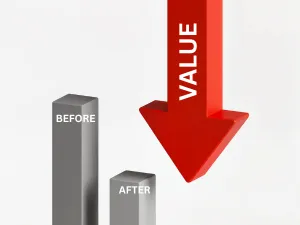
The Hidden Value in Your Diminished Value Claim (and How to Get It)
If your car’s been in an accident, it’s probably worth less, even after it’s repaired.
You did everything right. You reported the accident, got your car repaired, and everything looks like new. But when you go to sell or trade it in, the dealer offers you less than you expected.
That drop in value isn’t bad luck; it’s called diminished value. And in many cases, your insurance company may owe you for it.
Most drivers have no idea they can file a diminished value claim, and even fewer know how to calculate it correctly. Here’s what it means, how it works, and how EstiVerify can help you recover what’s rightfully yours.
1. What Is Diminished Value?
Diminished value is the amount of money your car loses in resale or trade-in value after it’s been damaged, even if it’s been perfectly repaired.
Buyers, dealers, and online car marketplaces all treat a previously damaged vehicle as worth less than one with a clean history. Once an accident shows up on a Carfax or similar report, your vehicle’s value takes a hit, typically anywhere from 10% to 25% depending on the severity of the damage, the car’s age, and its condition before the crash.
Even if your car looks perfect, that report follows it forever.
2. Why Insurers Don’t Bring It Up
Here’s the truth: most insurance companies don’t tell you about diminished value because it’s another payout they’d rather avoid.
Insurers know that most drivers never file a claim for it, and many assume they aren’t eligible. In reality, if your car was repaired after an accident caused by another driver, you can often file a diminished value claim against that driver’s insurance policy.
In first-party claims (where you use your own insurance), it’s trickier, some policies exclude it, but not all. Either way, insurers won’t volunteer that information. You have to ask, and you have to prove it.
3. How Much Value Can You Lose?
Let’s put some numbers to it.
Imagine your vehicle was worth $25,000 before a moderate collision. After repairs, it might only be worth $21,000–$22,000 on the open market. That difference, $3,000–$4,000, is your diminished value.
For higher-end or newer vehicles, the gap can be much larger. In some cases, we’ve seen losses exceeding $10,000 due to frame damage, deployed airbags, or multiple panels being replaced.
Even minor accidents can shave off $1,000 or more, especially if the report shows paint or structural work.
4. The Three Types of Diminished Value
It helps to understand the industry terms insurers use:
Immediate Diminished Value: The difference in value right after the accident, before any repairs.
Inherent Diminished Value: The permanent loss in value after quality repairs are made (the most common claim).
Repair-Related Diminished Value: When poor-quality or incomplete repairs further reduce value.
Most consumers are affected by inherent diminished value, the unavoidable loss that happens simply because the car now has a damage history.
5. How Insurers Push Back
When you file a diminished value claim, insurers often respond with one of three tactics:
“We don’t cover that.” (Not always true.)
“Your car’s too old or has too many miles.” (Also not always true.)
“We’ll calculate it for you.” (That usually means they’ll use a formula that heavily favors them.)
The most common insurer method is called the 17c formula, which caps your payout using arbitrary percentages and rarely reflects real market data. It’s legal, but it’s not fair.
Independent valuation reports, like those done through EstiVerify, use actual sales data, depreciation models, and repair analysis to show the true loss in value, not the low number the insurer’s formula produces.
6. How EstiVerify Helps
At EstiVerify, our certified estimators and valuation experts build a custom diminished value report for your specific vehicle.
We analyze:
Pre-accident market value
Extent of damage and repair quality
Local resale data from dealerships and online listings
How the accident appears on vehicle history reports
You get a clear, professional document showing your real value loss, supported by data and repair records. This report can be used to negotiate with the insurer or as evidence in a legal or appraisal process.
Why it matters: Without documentation, you’re asking the insurer to play fair. With it, you’re showing proof they can’t ignore.
7. When to File a Diminished Value Claim
The accident wasn’t your fault
The car has been repaired and the claim is closed
The repairs were completed correctly using quality parts
Your car is less than 7 years old and has under 100,000 miles
The car had a clean title and no previous major accidents
Even if your vehicle doesn’t meet all these points, it may still qualify, especially if it’s newer or higher in market value.
8. Why It Matters More Than Ever
Today’s used car market is more transparent than ever. Buyers check Carfax, AutoCheck, and VIN history tools before they even make an offer. Once an accident is on record, there’s no hiding it.
Filing for diminished value isn’t “being greedy.” It’s being smart. You paid for insurance coverage that should make you whole, not just fix your car, but restore its value.
9. The EstiVerify Difference
We’re not a body shop. We’re not an insurer. We’re independent experts who work for you.
Our goal is to make sure your car’s real value is recognized and compensated. Whether you’re still negotiating your repair claim or your car’s already fixed, we can help you build the evidence you need to support your diminished value claim.
You don’t have to guess what your car’s worth after the accident, we’ll show you the truth.
[Request a Diminished Value Review → estiverify upload estimate
The Bottom Line
Every accident takes value out of your vehicle. Insurance companies know it, they just hope you don’t.
With EstiVerify, you can see what your car was worth, what it’s worth now, and how to recover that loss.
Don’t leave money on the table because the system counts on silence.
Fairness isn’t automatic — it’s verified.

Ronald Addington
Author Bio: Paul Addington Paul Addington is an automotive claims strategist and consumer advocate with over a decade of experience navigating the collision repair and insurance industries. He specializes in helping drivers understand their rights, maximize their insurance settlements, and make smart decisions after an accident — whether they’re repairing their vehicle or not. Paul is passionate about transparency in the claims process and contributes regularly to industry blogs and publications focused on fair valuation, estimate auditing, and payout optimization. When he’s not digging into estimates, you’ll find him restoring vintage motorcycles or coaching local debate teams on how to win with facts.
Experience. Certification. Independence.
Every EstiVerify estimator has at least 15 years of real-world estimating experience.
We use the same data and standards trusted by body shops and manufacturers, not insurance companies.
That means our advice is neutral, accurate, and built around one goal: protecting you.
Get In Touch
Email: [email protected]
Address
Office: Cincinnati, OH
Assistance Hours
AI Voice Assistant Available 24/7
Phone Number:
(859) 743-3041
EstiVerify
Giving vehicle owners their power back in collision repairs.
© 2026 EstiVerify - All Rights Reserved